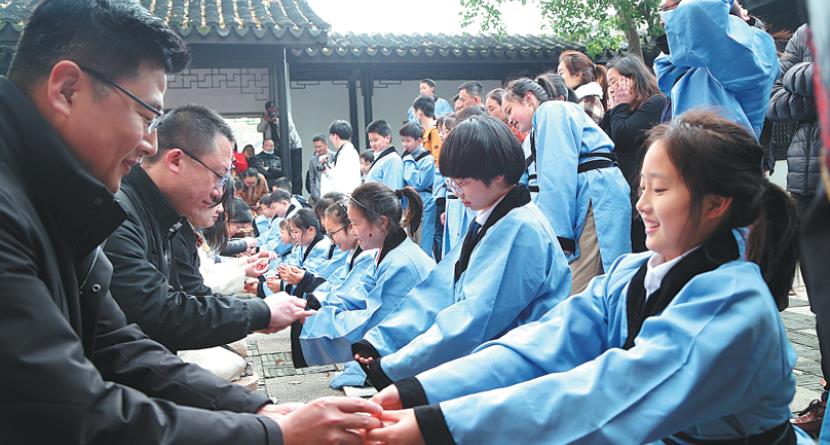
The Book of Rites
Introduction
The Book of Rites, known in Chinese as Liji, is a distinguished collection of texts that deal with a variety of ceremonial and ritual practices from ancient China, particularly before the Qin Dynasty (221-206 BC). It is a cornerstone work in early Confucian literature, providing deep insights into the philosophical, educational, political, and aesthetic ideas of the era. As an ancient Confucian classic, the Book of Rites holds a significant place in the understanding and evolution of Confucian thought and Chinese traditional culture.
Historical Background
The Book of Rites was compiled during a time when China was transitioning through various dynastic periods. It embodies thoughts and teachings from the time leading up to the Qin Dynasty and reflects the socio-political environment of the Warring States Period (475-221 BC). This period was marked by widespread intellectual development and the emergence of Confucianism as a dominant philosophical school.
Confucianism and Rituals
Rituals, or "li" in Chinese, are a central component of Confucian philosophy, which is emphasized throughout the Book of Rites. The text provides a detailed account of various rites, reflecting their importance in maintaining social order and hierarchy. These rituals were not only religious but also a means to reinforce moral values and societal norms.
According to Liu Feng, a researcher from the Institute of Philosophy at the Chinese Academy of Social Sciences, early Confucianism which flourished before the Han Dynasty (206 BC-AD 220), placed great importance on "li". It was considered crucial for the development and division of early Confucianism. The study of these texts provides valuable insights into the progression of Confucian thought and its integration into social and political systems.
Cultural Core and Social System
The Book of Rites emphasizes the concept of "li" as the core of Chinese culture and its social system. Originating from the Western Zhou Dynasty, the regulations on ritual and music were meant to strengthen the concept of hierarchy among people and thus maintain social order. This cultural emphasis on li underscores the intertwining of ritual practice with political and philosophical ideologies of ancient China.
Significance in Traditional Chinese Culture
The Book of Rites is not just an academic resource; it offers influential ideas deeply embedded in traditional Chinese culture. Concepts such as pursuing harmony between people and nature, and the importance of ruling based on virtues rather than force, are extensively discussed within its chapters.








